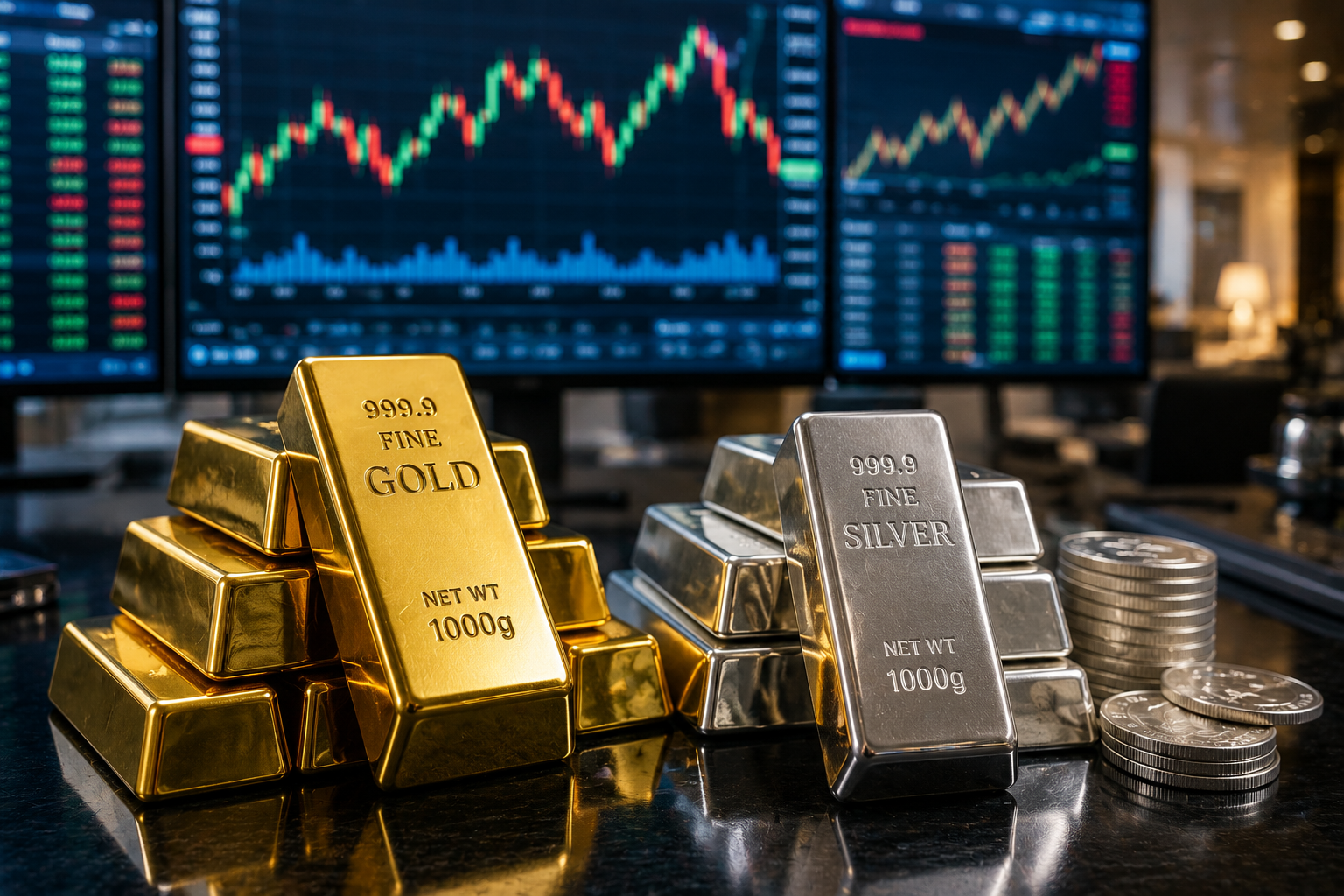

When precious metals become the center of investor attention, one question always returns: Silver vs Gold, which is the better investment?
- Why Precious Metals Remain Popular in 2026: Silver vs Gold
- Gold’s Strong Rally Finally Slowed Down: Silver vs Gold
- Silver Has Become More Volatile: Silver vs Gold
- Silver May Offer Higher Long-Term Returns: Silver vs Gold
- Investment Timeline Matters More Than Anything: Silver vs Gold
- Industrial Demand Gives Silver a Unique Advantage: Silver vs Gold
- Gold Remains the King of Inflation Protection
- How Investors Should Choose Between Silver and Gold
- What Experts Are Watching Next
- Final Thoughts
That debate has become especially important this summer as both metals have experienced notable price declines. Gold, which enjoyed a remarkable rally earlier this year, has pulled back significantly. Silver has also fallen sharply, losing around 15% of its value since mid-May.
For investors looking at lower prices as a buying opportunity, the current market presents an interesting choice. Should you focus on gold, the traditional safe-haven asset? Or does silver offer greater potential for future gains?
According to several precious metals experts, the answer depends entirely on your goals, risk tolerance, and investment timeline.
Why Precious Metals Remain Popular in 2026: Silver vs Gold
Precious metals have long played an important role in investment portfolios.
During periods of economic uncertainty, inflation concerns, and market volatility, investors often turn to physical assets to help preserve wealth.
Gold has traditionally been viewed as a safe-haven asset, while silver offers both investment appeal and industrial demand.
This combination makes the Silver vs Gold discussion particularly relevant during uncertain economic periods.
With inflation rising again and energy prices moving higher, many investors are reassessing how precious metals fit into their long-term strategies.
Gold’s Strong Rally Finally Slowed Down: Silver vs Gold
One reason investors are revisiting the Silver vs Gold debate is the recent correction in gold prices.
Gold Had an Exceptional Run
Earlier in 2026, gold experienced a powerful surge that pushed prices to record levels.
According to Brett Elliott, Director of Content at American Precious Metals Exchange (APMEX), gold’s rise became so strong that a market correction eventually became likely.
He explained that gold had been performing exceptionally well for an extended period without facing meaningful competition from other assets.
As often happens in financial markets, strong rallies eventually experience pullbacks.
Why Gold Prices Declined
Several factors contributed to the recent decline in gold prices:
- Higher interest rates
- Rising oil prices
- Changing Federal Reserve expectations
- Profit-taking by investors
These developments created pressure on gold after its impressive run earlier in the year.
Silver Has Become More Volatile: Silver vs Gold
While gold has declined, silver has experienced even larger price swings.
Silver Prices Fell Sharply
Since mid-May, silver prices have dropped by approximately 15%.
That decline has attracted investors searching for potential bargains.
However, experts caution that silver’s lower price comes with additional risk.
Volatility Is Silver’s Biggest Challenge
According to Elliott, silver is considerably more volatile than gold.
This means silver prices tend to move more dramatically in both directions.
Investors may experience larger gains when markets move higher, but they can also face larger losses during downturns.
Steve Azoury, a chartered financial consultant and owner of Azoury Financial, noted that silver has displayed much greater volatility than gold over the past five years.
Meanwhile, gold has generally produced steadier and more gradual growth.
Silver May Offer Higher Long-Term Returns: Silver vs Gold
One of the most interesting aspects of the Silver vs Gold comparison involves long-term performance.
Silver Has Outperformed Over Five Years
According to Elliott, silver has generated stronger returns than gold over the last five years.
At the time of the report:
- Silver: +156% five-year return
- Gold: +121% five-year return
Although these figures can change daily, the overall trend has remained consistent.
Silver’s higher volatility has often been accompanied by stronger long-term growth potential.
Why Silver Sometimes Performs Better
Silver benefits from multiple sources of demand.
Unlike gold, which is primarily used as a store of value, silver has significant industrial applications.
This additional demand can support price growth during periods of economic expansion.
As a result, investors seeking larger returns may find silver attractive despite its increased risk.
Investment Timeline Matters More Than Anything: Silver vs Gold
Experts repeatedly emphasized that investment timing plays a major role in determining whether silver or gold is the better choice.
Silver Is Not Ideal for Short-Term Investors
Elliott stressed that he would not recommend buying silver with a time horizon of only a few months.
Because silver prices can fluctuate significantly, short-term investors may struggle to benefit from its long-term growth potential.
Large price swings can create uncertainty over shorter periods.
Long-Term Investors May Benefit More
Historically, precious metal investors have often achieved better results when they adopt a long-term perspective.
Silver’s performance tends to improve over extended holding periods.
An investor who purchased silver a year ago would have seen impressive gains, but experts caution that such returns are not guaranteed.
Patience remains an important factor when investing in precious metals.
Industrial Demand Gives Silver a Unique Advantage: Silver vs Gold
One factor that distinguishes silver from gold is its industrial usefulness.
Growing Demand From Technology
According to Chuck Czajka, founder of Macro Money Concepts, silver’s role in technology could support future demand.
He highlighted silver’s importance in projects related to artificial intelligence.
As technology development continues, industrial demand could create additional support for silver prices.
More Than Just an Investment Metal
Silver is used across multiple industries.
Its applications include:
- Electronics manufacturing
- Renewable energy technologies
- Industrial equipment
- Advanced technology systems
These uses provide an additional source of demand that gold generally does not enjoy.
This makes the Silver vs Gold decision more complex than a simple comparison of price performance.
Gold Remains the King of Inflation Protection
While silver may offer stronger growth potential, experts continue to view gold as the superior inflation hedge.
Gold’s Safe-Haven Reputation
According to Czajka, gold should not be viewed primarily as an income-generating asset.
Instead, it serves as a form of wealth protection.
Many investors purchase gold to preserve purchasing power during periods of economic uncertainty.
Protection Against Inflation
The latest government data placed the U.S. inflation rate at 4.2%, up from 2.4% earlier in the year.
As inflation rises, investors often seek assets that can maintain value over time.
Elliott explained that gold has historically performed well during inflationary periods because it is less dependent on industrial demand cycles.
For investors focused primarily on wealth preservation, gold continues to hold a significant advantage.
How Investors Should Choose Between Silver and Gold
The right choice depends on individual objectives.
Silver May Be Better If You Want:
- Higher potential returns
- Long-term growth opportunities
- Exposure to industrial demand
- Greater risk tolerance
Gold May Be Better If You Want:
- Inflation protection
- Wealth preservation
- Lower volatility
- Safe-haven exposure
Neither metal is automatically superior.
The best option depends on what role you want precious metals to play in your overall financial strategy.
What Experts Are Watching Next
Market conditions continue to evolve.
Experts remain focused on several important factors:
Inflation Trends
Rising inflation could increase demand for gold.
Interest Rate Decisions
Federal Reserve policy will continue influencing precious metal prices.
Industrial Demand
Technology and manufacturing activity could affect silver’s outlook.
Investor Sentiment
Market confidence often plays a major role in determining precious metal performance.
These factors will likely shape the future of the Silver vs Gold debate throughout the remainder of 2026.
Final Thoughts
The Silver vs Gold discussion does not have a universal answer because each metal serves a different purpose. Silver offers stronger long-term growth potential and benefits from industrial demand, but it also comes with significantly greater volatility.
Gold, on the other hand, remains the preferred choice for investors seeking stability, inflation protection, and long-term wealth preservation. Its role as a safe-haven asset continues to attract investors during uncertain economic periods.
With both metals trading below recent highs, this summer may present opportunities for investors willing to think long term. Whether you choose silver, gold, or a combination of both, understanding your goals and risk tolerance will remain the most important factor in making a successful investment decision.
Read Other Interesting news here: Saudi Oil Exports