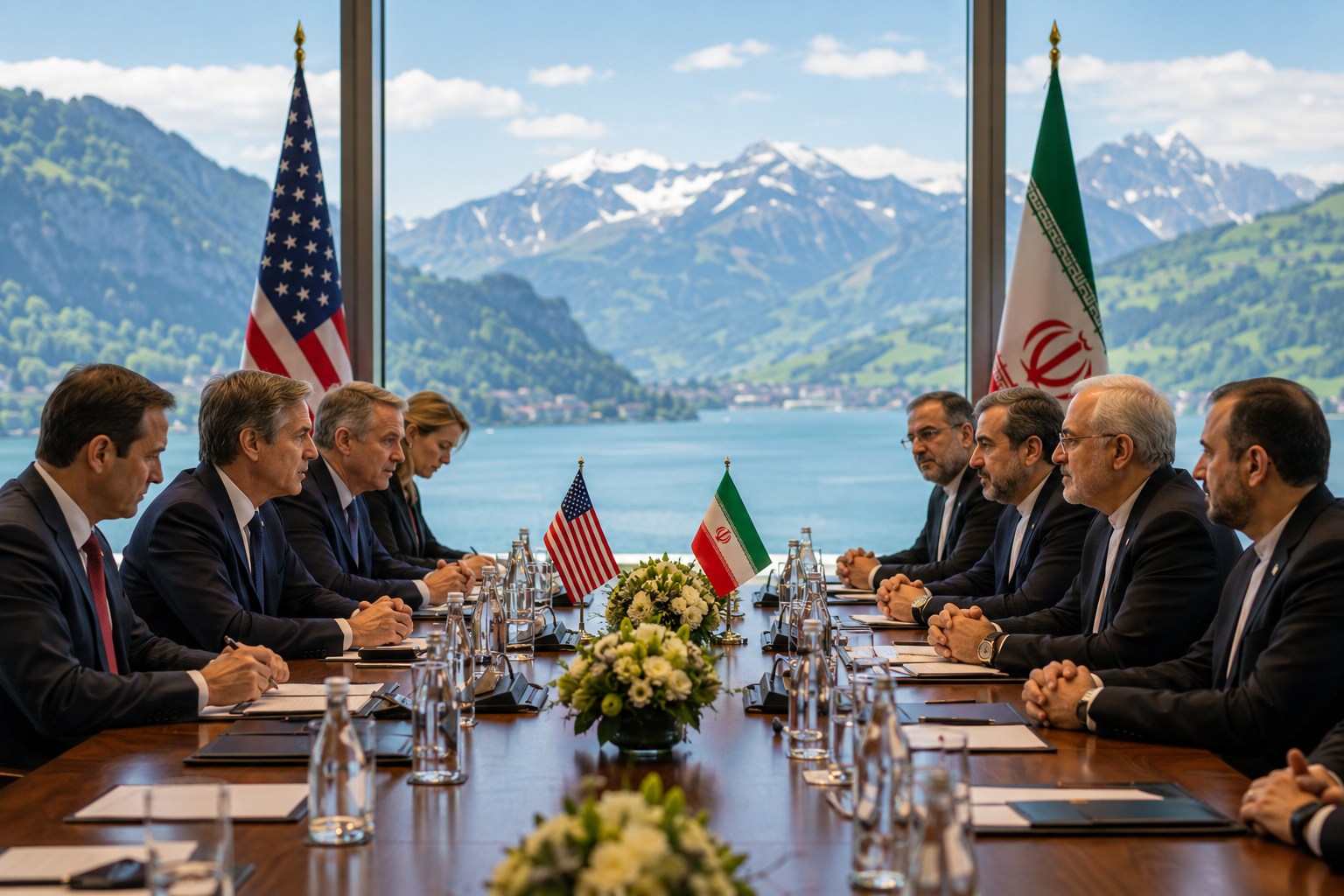

The latest Iran US Talks in Switzerland have become one of the most closely watched diplomatic events of the year. After months of uncertainty and regional tensions, negotiators from both countries met with the support of international mediators to explore possible paths toward a broader agreement.
- Why the Switzerland Meeting Mattered: Iran US Talks
- The Biggest Achievement: A 60-Day Roadmap: Iran US Talks
- A New Oversight Committee Will Guide the Process: Iran US Talks
- Technical Negotiations Will Continue: Iran US Talks
- Regional Security Remains a Major Focus: Iran US Talks
- Communication Channels Are Being Strengthened: Iran US Talks
- Economic Considerations Could Shape Future Progress: Iran US Talks
- What Happens During the Next 60 Days?
- Continued Technical Discussions: Iran US Talks
- Oversight Committee Reviews: Iran US Talks
- Regional Developments: Iran US Talks
- Potential Framework for a Larger Agreement: Iran US Talks
- Challenges Still Remain: Iran US Talks
- Why the Talks Matter Beyond Diplomacy: Iran US Talks
- Final Thoughts
While the discussions did not resolve every issue, they produced several important outcomes that could shape future relations between the two sides. Most importantly, negotiators agreed to continue working within a structured framework designed to keep diplomacy moving forward.
The meeting generated cautious optimism among observers because it established clear next steps, strengthened communication channels, and created new mechanisms to manage future negotiations.
With a proposed 60-day roadmap now in place, attention is shifting toward what happens next and whether both sides can transform diplomatic momentum into lasting progress.
Why the Switzerland Meeting Mattered: Iran US Talks
Diplomatic engagement between Iran and the United States has historically been complicated.
That is why the Switzerland talks attracted significant international attention. The discussions were viewed as an opportunity to reduce tensions and explore practical solutions through direct negotiation.
The talks were held following earlier diplomatic efforts and were aimed at advancing discussions under an existing framework established through previous agreements.
Rather than focusing solely on immediate outcomes, negotiators concentrated on building a foundation for future progress.
This approach allowed both sides to identify areas of agreement while postponing some of the more difficult issues for later discussions.
The Biggest Achievement: A 60-Day Roadmap: Iran US Talks
One of the most significant outcomes from the talks was the agreement on a structured timeline.
According to mediators, both parties accepted a framework that seeks to move negotiations toward a broader agreement within 60 days.
This roadmap provides direction for future discussions and helps ensure that diplomatic momentum is maintained.
Deadlines often play a crucial role in negotiations because they encourage continuous engagement and reduce the risk of delays.
Instead of leaving discussions open-ended, the roadmap creates a clear schedule for future meetings and technical consultations.
For many observers, this was the most meaningful achievement of the Switzerland meeting.
A New Oversight Committee Will Guide the Process: Iran US Talks
Another major development was the creation of a new oversight mechanism designed to support the negotiation process.
Political Coordination and Monitoring
The newly established committee will provide high-level political supervision and help ensure that discussions continue according to the agreed framework.
Its role will include reviewing progress, addressing concerns, and helping negotiators overcome obstacles that may emerge during future talks.
This structure gives the diplomatic process an additional layer of accountability.
Why Oversight Matters
Many international negotiations encounter difficulties because technical discussions and political decisions become disconnected.
The oversight committee aims to prevent that problem.
By maintaining regular communication between political leaders and negotiating teams, the committee can help keep discussions focused on shared objectives.
This could improve the chances of reaching a successful outcome within the agreed timeline.
Technical Negotiations Will Continue: Iran US Talks
While political leaders established the overall direction of the talks, many practical details still need to be addressed.
That responsibility now falls to technical teams.
What Technical Teams Will Discuss
Experts from both sides are expected to continue negotiations on implementation procedures and verification mechanisms.
These discussions are often highly detailed and require extensive coordination.
Areas expected to receive attention include:
- Implementation timelines
- Monitoring procedures
- Verification systems
- Security arrangements
- Future diplomatic commitments
Although these conversations may receive less media attention, they are often where agreements are ultimately shaped.
Why Technical Talks Are Important
A political agreement can only succeed if practical details are clearly defined.
Technical experts help transform broad diplomatic commitments into workable policies.
Without this step, even promising political agreements can face implementation challenges later.
Regional Security Remains a Major Focus: Iran US Talks
The talks also highlighted the importance of regional stability.
Security developments across the Middle East continue to influence diplomatic discussions between Iran and the United States.
Lebanon Remains a Sensitive Issue
Among the topics receiving attention was the situation in Lebanon.
Previous diplomatic efforts emphasized respect for Lebanese sovereignty and the need to reduce tensions in the region.
However, implementation remains complex.
Because regional developments can affect broader negotiations, many observers believe Lebanon will remain an important factor during future discussions.
Preventing Escalation
Participants also discussed mechanisms designed to reduce misunderstandings and lower the risk of escalation.
These measures are intended to support stability while broader negotiations continue.
Although they may not solve underlying disagreements, they can help create a more predictable environment for diplomacy.
Communication Channels Are Being Strengthened: Iran US Talks
One of the less visible but highly important outcomes involved communication.
Successful diplomacy depends on reliable communication channels, especially during periods of tension.
Building Confidence
The talks reportedly included discussions about maintaining communication mechanisms that can reduce misunderstandings and improve coordination.
Confidence-building measures often serve as the foundation for broader agreements.
They help create trust between negotiating parties and make future cooperation easier.
Why Communication Matters
Diplomatic crises frequently occur when communication breaks down.
By keeping channels open, both sides can respond more effectively to emerging challenges.
Strong communication can:
- Reduce uncertainty
- Prevent miscalculations
- Support conflict prevention
- Encourage continued dialogue
These benefits make communication one of the most valuable tools in diplomacy.
Economic Considerations Could Shape Future Progress: Iran US Talks
Diplomatic negotiations are rarely limited to political issues alone.
Economic factors often play an important role in determining whether agreements move forward.
Signals of Economic Engagement
The Switzerland talks generated discussion about economic measures connected to the broader diplomatic process.
Observers view economic developments as indicators of how seriously both sides are approaching negotiations.
When economic cooperation becomes possible, it can create additional incentives for maintaining diplomatic momentum.
Global Interest in the Talks
International markets and governments closely monitor developments between Iran and the United States.
Any sign of progress can influence expectations regarding regional stability, trade routes, and economic activity.
As a result, the talks attracted attention far beyond the negotiating table.
What Happens During the Next 60 Days?
The coming weeks will be critical.
Negotiators now face the challenge of converting preliminary understandings into concrete results.
Continued Technical Discussions: Iran US Talks
Technical experts will continue working through unresolved issues and refining implementation plans.
Their recommendations could shape future political decisions.
Oversight Committee Reviews: Iran US Talks
The newly established committee will monitor progress and help resolve emerging concerns.
Regular reviews are expected to keep negotiations aligned with the roadmap.
Regional Developments: Iran US Talks
Security conditions across the region will continue to influence the diplomatic environment.
Positive developments could support negotiations, while instability could create new challenges.
Potential Framework for a Larger Agreement: Iran US Talks
If discussions proceed successfully, negotiators may eventually produce a broader agreement covering multiple areas of concern.
This remains one of the primary objectives of the current diplomatic process.
Challenges Still Remain: Iran US Talks
Despite the positive tone following the talks, several obstacles remain.
Diplomatic negotiations are rarely straightforward, especially when dealing with complex geopolitical issues.
Some of the challenges ahead include:
- Differences over implementation details
- Regional security concerns
- Political opposition from various stakeholders
- Verification and monitoring requirements
- Long-standing trust issues
These challenges do not guarantee failure, but they highlight why continued diplomacy will be necessary.
Progress achieved in Switzerland represents an opportunity rather than a final solution.
Why the Talks Matter Beyond Diplomacy: Iran US Talks
The significance of the Switzerland discussions extends beyond relations between Iran and the United States.
Successful diplomacy can contribute to broader regional stability.
It can also encourage international cooperation and reduce uncertainty in a region that plays a vital role in global affairs.
For this reason, governments, businesses, and analysts around the world are closely watching the next phase of negotiations.
The outcome could influence political, economic, and security developments for years to come.
Final Thoughts
The latest Iran US Talks in Switzerland delivered several encouraging outcomes. The agreement on a 60-day roadmap, the establishment of a new oversight committee, and the continuation of technical negotiations all represent meaningful progress in a challenging diplomatic process.
Although major issues remain unresolved, the talks created a structured path forward and demonstrated a willingness to continue engagement through dialogue.
The next two months will be crucial. Negotiators must now turn diplomatic momentum into practical results while managing regional challenges and political pressures.
Whether a broader agreement ultimately emerges remains uncertain, but the Switzerland meeting has provided a foundation for continued discussions and renewed hope for progress. As the process moves forward, the world will be watching closely.
Read Other Interesting news here: XasComplo Review