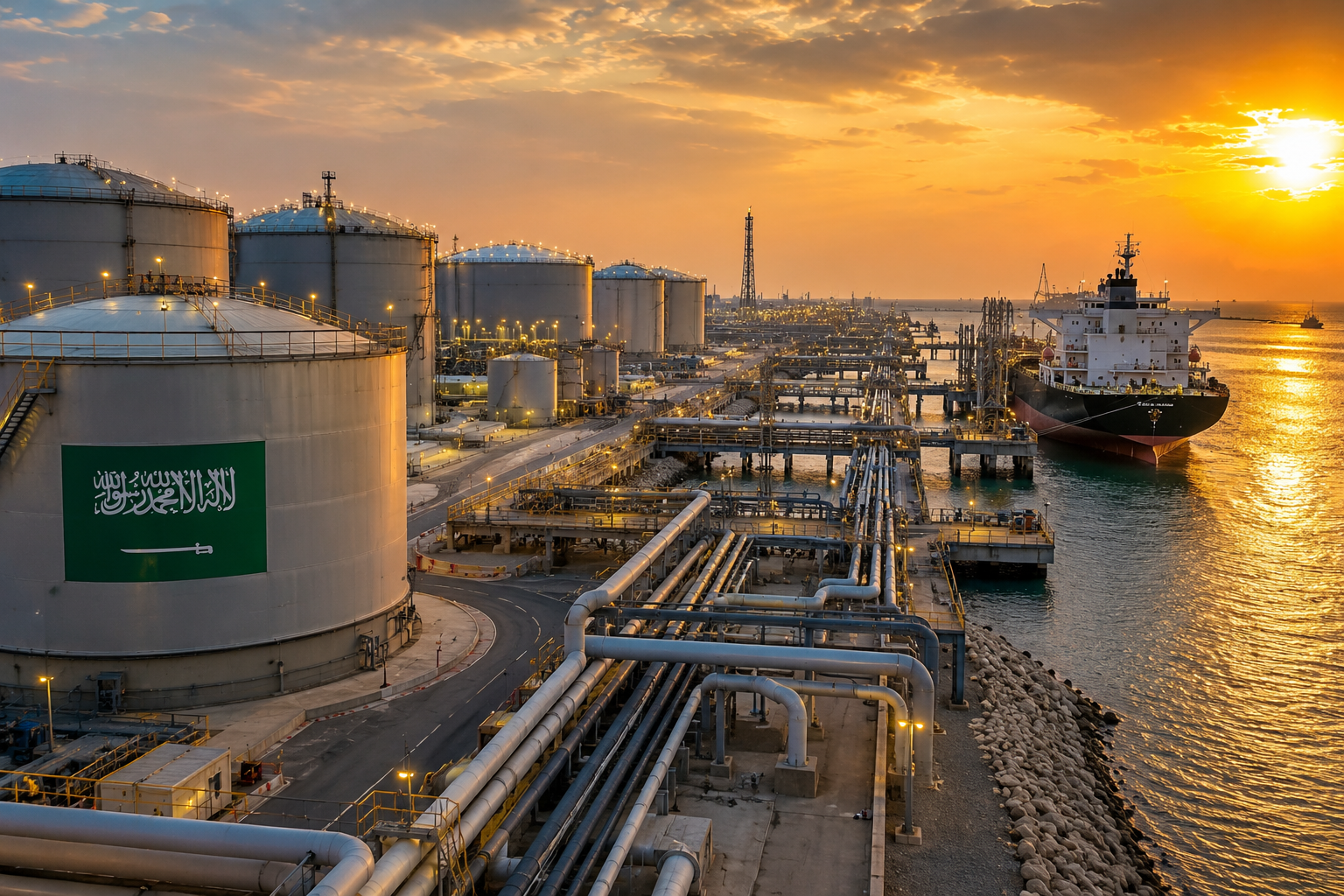

The latest figures on Saudi Oil Exports have captured the attention of energy markets worldwide. As the world’s leading oil exporter, Saudi Arabia plays a critical role in global energy supply, making every change in its production and export levels closely watched by governments, investors, and businesses.
- Saudi Oil Exports Reach Their Lowest Level Since 2002: Saudi Oil Exports
- Understanding the Scale of the Export Decline: Saudi Oil Exports
- Strait of Hormuz Disruptions Played a Key Role: Saudi Oil Exports
- Saudi Oil Production Also Hit a Historic Low: Saudi Oil Exports
- How Investors and Markets Are Responding
- What the Decline Means for Saudi Arabia
- Global Implications of Lower Saudi Oil Exports
- What Happens Next?
- Recovery of Shipping Routes
- Monitoring Production Levels
- Geopolitical Developments
- Future Demand Trends
- Final Thoughts
In April 2026, Saudi Arabia recorded a historic decline in crude oil exports. According to data released by the Joint Organisations Data Initiative (JODI), exports fell to their lowest level since records began in January 2002. At the same time, oil production also dropped to a record low.
The development comes amid geopolitical tensions and disruptions affecting one of the world’s most important energy transportation routes. As a result, global markets are trying to understand what caused the decline and what it could mean for the future of the energy sector.
Saudi Oil Exports Reach Their Lowest Level Since 2002: Saudi Oil Exports
The most significant headline from the latest JODI report is the sharp fall in Saudi Oil Exports.
According to the data, Saudi crude exports declined to 3.986 million barrels per day in April. This was down from 4.974 million barrels per day in March.
More importantly, the April figure represents the lowest export level recorded since JODI began tracking Saudi oil data in January 2002.
For a country that has long been a cornerstone of global oil supply, this milestone is highly unusual and immediately raised concerns among energy analysts.
The decline also marked the second consecutive monthly drop, indicating that the situation was not simply a one-time event.
Understanding the Scale of the Export Decline: Saudi Oil Exports
The numbers become even more striking when compared with previous months.
Export Volumes Fell Rapidly
Saudi Arabia exported 7.276 million barrels per day in February 2026.
By March, exports had dropped significantly to 4.974 million barrels per day.
Then, in April, exports fell again to 3.986 million barrels per day.
This means Saudi exports declined by more than 3 million barrels per day in just two months.
Such a dramatic reduction is rare and highlights the extraordinary circumstances affecting energy markets.
Why These Numbers Matter
Changes in Saudi Oil Exports affect much more than Saudi Arabia itself.
Because the kingdom is one of the world’s largest oil suppliers, fluctuations in its exports can influence:
- Global oil prices
- Energy security strategies
- Industrial production costs
- Transportation expenses
- Investor confidence
That is why every major movement in Saudi export data attracts worldwide attention.
Strait of Hormuz Disruptions Played a Key Role: Saudi Oil Exports
One of the primary reasons behind the decline was the disruption affecting the Strait of Hormuz.
The data indicated that Saudi exports were heavily impacted by the blockade of the strategic waterway during the U.S.-Israeli war against Iran.
This development created serious challenges for oil shipments moving through the region.
Why the Strait of Hormuz Matters
The Strait of Hormuz is one of the most important shipping routes on the planet.
A significant portion of global oil exports passes through this narrow corridor every day.
Any disruption in the area can immediately affect energy supplies and shipping operations.
The route connects Gulf oil producers to international markets, making it essential for global trade.
When transportation becomes difficult, export volumes often decline regardless of production capacity.
Global Energy Markets Felt the Impact
Energy traders reacted quickly to reports of shipping disruptions.
Concerns about supply availability increased as the blockade limited the movement of crude oil through the region.
This situation reminded markets how vulnerable global energy systems remain to geopolitical developments.
Saudi Oil Production Also Hit a Historic Low: Saudi Oil Exports
The export decline was accompanied by another important development.
Saudi Arabia’s oil production also fell to its lowest level since JODI started collecting data.
Production Numbers Continue to Fall
According to JODI figures, Saudi oil production dropped to 6.316 million barrels per day in April.
In March, production stood at 6.967 million barrels per day.
The April figure represents a record low under the current reporting system.
This means both production and exports reached historic lows at the same time.
Why Production Matters
Production levels are a key indicator of market conditions.
When production declines, export volumes often follow.
However, production figures can also reflect broader strategic decisions, logistical challenges, and changing market conditions.
In this case, the simultaneous drop in both production and exports created a strong signal that global energy markets could not ignore.
How Investors and Markets Are Responding
The sharp decline in Saudi Oil Exports immediately attracted the attention of investors.
Concerns About Future Supply
Lower export volumes naturally raise questions about future oil availability.
When a major producer ships less oil, markets often become more sensitive to potential disruptions elsewhere.
This can increase price volatility and create uncertainty for businesses that depend on stable energy costs.
Increased Market Monitoring
Investors are now closely watching several developments:
- Future Saudi production levels.
- Export recovery timelines.
- Conditions in the Strait of Hormuz.
- Broader geopolitical developments.
These factors will likely influence energy prices throughout the coming months.
What the Decline Means for Saudi Arabia
Saudi Arabia remains one of the most influential players in global energy markets.
However, the recent figures highlight the challenges facing even the largest oil producers.
Economic Implications
Oil exports are a major source of national revenue.
When exports decline significantly, policymakers must closely monitor economic conditions and market trends.
Although Saudi Arabia has experience managing fluctuations in oil markets, record-low export figures still represent a noteworthy challenge.
Strategic Importance
The kingdom continues to play a central role in global energy stability.
Because of its production capacity and market influence, any change in Saudi oil activity affects international expectations.
That is why governments around the world are monitoring developments closely.
Global Implications of Lower Saudi Oil Exports
The effects of declining Saudi Oil Exports extend well beyond the Middle East.
Impact on Energy Security
Many countries rely on stable oil supplies to support transportation, manufacturing, and economic growth.
When exports from a major supplier fall, concerns about energy security often increase.
Governments may review supply strategies and evaluate alternative sources.
Influence on Oil Prices
Reduced export volumes can contribute to higher price volatility.
Even if global supply remains sufficient, uncertainty alone can affect market behavior.
That makes developments in Saudi Arabia particularly important for traders and policymakers.
Supply Chain Considerations
Shipping disruptions can also affect global trade routes.
The situation demonstrates how geopolitical events and transportation challenges can quickly influence international supply chains.
What Happens Next?
The coming months will determine whether the decline in Saudi Oil Exports was temporary or part of a broader trend.
Recovery of Shipping Routes
The future condition of the Strait of Hormuz will remain a major factor.
Any improvement in transportation conditions could help exports recover.
Monitoring Production Levels
Analysts will closely track Saudi production data for signs of stabilization.
A rebound in production could support higher export volumes.
Geopolitical Developments
Regional stability will continue to influence market expectations.
Diplomatic progress could improve conditions, while additional disruptions could create new challenges.
Future Demand Trends
Global oil demand will also play an important role in shaping export activity.
Changes in consumption patterns could affect production and shipping decisions moving forward.
Final Thoughts
The latest figures on Saudi Oil Exports reveal one of the most significant energy market developments of 2026. Exports fell to 3.986 million barrels per day in April, marking the lowest level recorded since January 2002. At the same time, Saudi oil production dropped to 6.316 million barrels per day, also a record low under JODI’s reporting system.
The decline was largely linked to disruptions in the Strait of Hormuz, highlighting the ongoing connection between geopolitics and global energy markets. While the situation has created uncertainty, it has also reinforced the importance of reliable transportation routes and stable energy supplies.
The coming months will be critical. Investors, governments, and businesses will continue monitoring production levels, export data, and regional developments to understand whether this historic decline represents a temporary disruption or the beginning of a longer-term trend. Regardless of the outcome, Saudi Oil Exports will remain one of the most important indicators in the global energy industry.
Read Other Interesting news here: Iran US Agreement